
"Clean Fashion": 2025 Fashion Trends and Responsible Material Choices
5 mins read czytania
19 May 2025

Fashion in 2025 is increasingly going hand-in-hand with responsibility. "Clean fashion" – inspired by theclean beautytrend – is a new approach to designing and wearing clothes. Less chemistry, more quality. Greater awareness, fewer compromises. At the heart of this movement are natural fabrics, transparent production processes, and user comfort. This is a trend that has the potential to stay with us for a long time, as more and more people don't want to choose between style and caring for themselves and the environment.

What does "clean fashion" mean and why is conscious clothing shopping important?

Clean fashion is a new perspective on clothing – more conscious, calmer, closer to the body and everyday life.Similar to the clean beauty trend, it's about simplicity of composition, honesty in production, and user comfort. It's also important that potentially skin-harmful chemicals are not used in production.

This approach was born out of saturation – the fashion market is literally flooded with clothes, mostly of very low quality, made from synthetic materials and produced in a non-transparent or even unethical way. And trends change every few weeks, encouraging consumers to buy more and more. Meanwhile, better materials mean greater wearing comfort, but also the satisfaction of making wise choices. Clothes are no longer just an accessory to a lifestyle, but become an integral part of it.

How to choose clothes aligned with the "clean" philosophy – a guide to natural materials

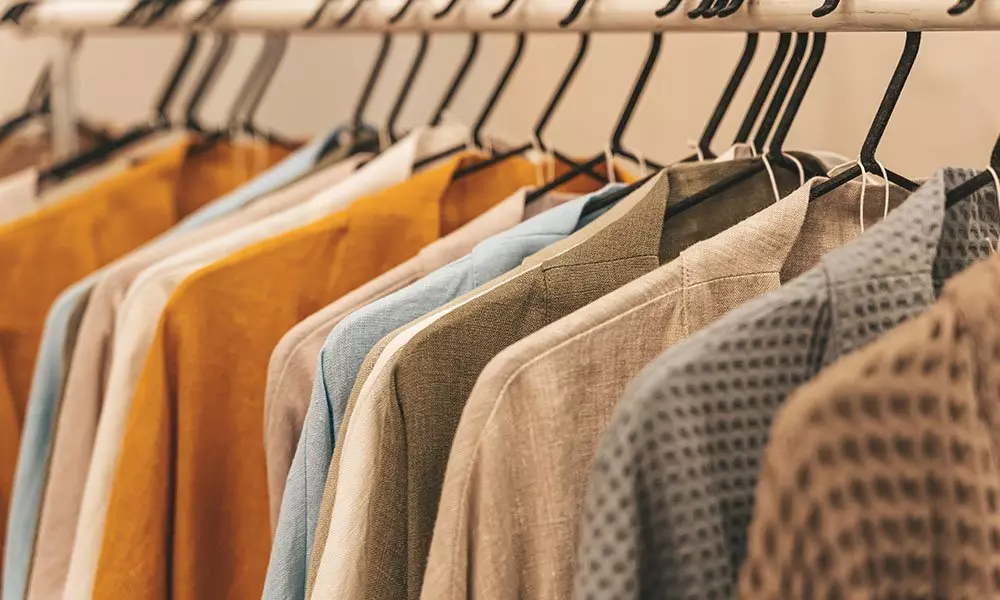
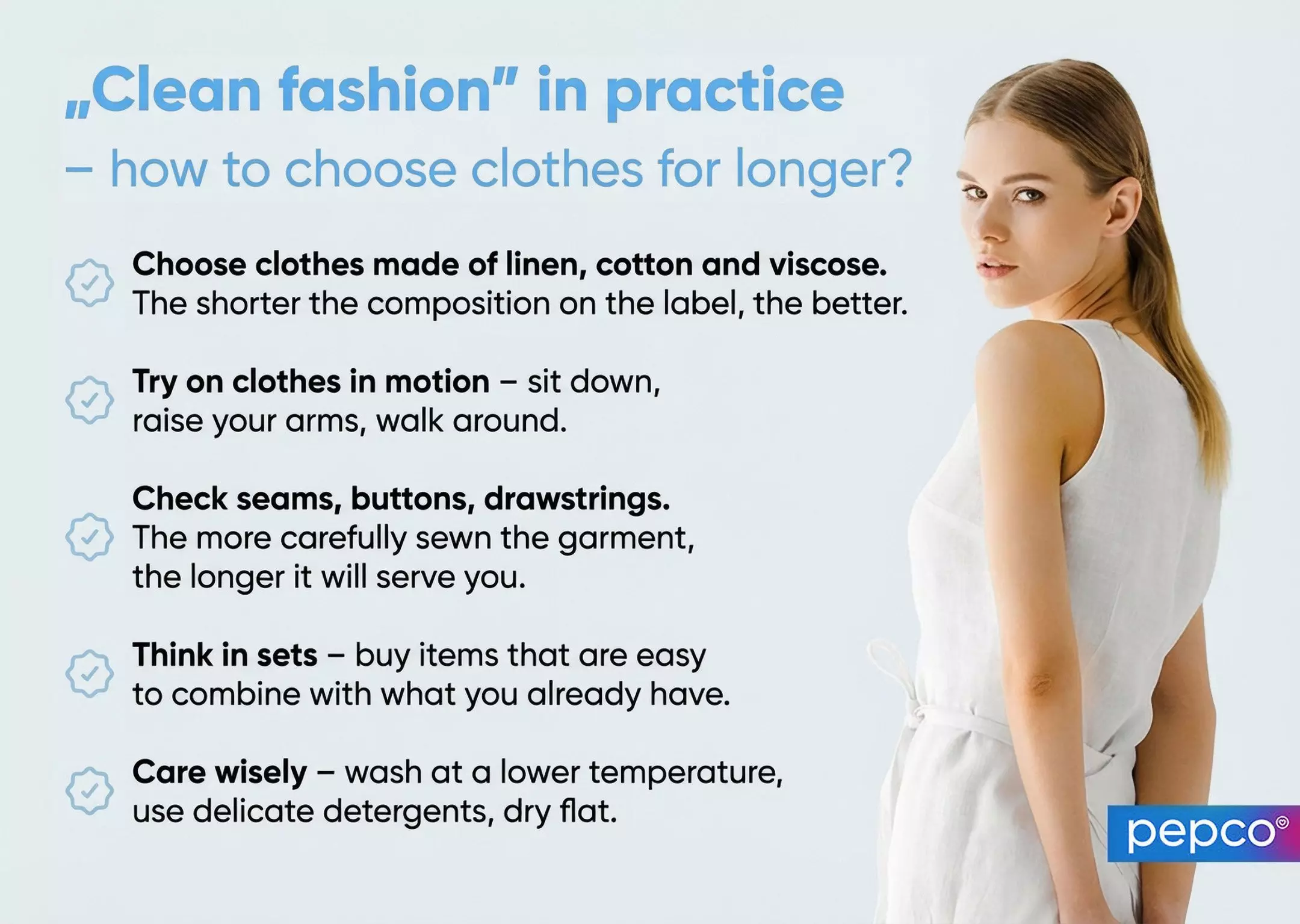
Start with the composition. Really – not the color, not the cut, but the composition should be the first indicator of a garment's quality, so always look at the labels when buying clothes. The shorter the list, the better.Reach more often for linen and cotton, as well as viscose– they are durable, breathable, and comfortable:

  • Linen is known for its breathability and lightness. It's ideal for warm days. It looks great in the form of loose shirts, straight-leg trousers, or dresses. Interestingly, it gains character over time – the more it's worn, the better it looks.
  • Cotton is suitable for building a versatile wardrobe, primarily basic wardrobe elements. Cotton t-shirts, underwear, sweatshirts, trousers, pajamas, and even dresses, provide freedom and don't lose their shape after the first wash. They are simply comfortable to wear. Choose cotton with added elastane if you prioritize full freedom of movement.
  • Viscose offers softness and lightness, which are particularly suitable for feminine styles – flared skirts, delicate blouses, or long dresses. It's pleasant to the touch and drapes well on the figure. Ideal for evenings, but also for the office if paired with something more classic.

Products made from these fabrics are a great base – after creating versatile sets, you just need to add accessories to create an outfit for any occasion: for a walk, to work, for a date.

Clean lifestyle, clean dressing style – how to ensure consistency

If you opt for simplicity, calmness, and comfort in your daily life – let your clothes reflect that.Look for wardrobe pieces that will work in various situations, especially everyday ones: at work, for a quick outing, for a lazy afternoon. Natural fabrics like linen, cotton, or viscose provide comfort and withstand daily wear well. Reach for high-quality clothing produced transparently. Be interested in the brand's values and choose consciously. Buy clothes for years, not for a season.

If you plan to reorganize your wardrobe, do it thoughtfully – learn about capsule wardrobes and create your own collection ofbasicsfrom which you can later create dozens of different outfits. Opt for neutral colors (white, black, grays, and beiges), and if you want to go wild with colors, choose individual pieces and accessories.

However, don't build your wardrobe around seasonal hits or universal advice that doesn't suit you, but around your own needs. When your dressing style aligns with your lifestyle, you gain comfort, confidence, and fewer unnecessary decisions.

Responsible fashion: quality over quantity

"Clean fashion" is not just a response to a trend, but a change in the way we think about clothing. Instead of more seasonal novelties, we opt for clothes that stay with us longer. Instead of impulse purchases, we choose items tailored to our lifestyle, needs, figure, and even beliefs. This is responsible fashion.

High quality doesn't always have to be expensive – sometimes all it takes is attention to the material, cut, and quality of finishing. "Clean fashion" offers not only style but also satisfaction from choices aligned with one's worldview and care for oneself and the planet.