Healthy breakfast
5 mins read czytania
25 January 2024

Breakfast is often called the most important meal of the day. And rightly so! After an overnight fast, breakfast provides the body with essential nutrients, initiating metabolic and energy processes necessary for proper functioning. A healthy breakfast is a meal that is properly balanced in terms of macronutrients, rich in protein and carbohydrates, and full of vitamins and minerals.

Let's see why breakfast is so important and how to compose it to get the most benefits from it.

How to compose healthy breakfasts?

A healthy breakfast should contain a properly balanced distribution of macronutrients, i.e., proteins, carbohydrates, and fats, as well as provide an adequate amount of fiber and vitamins.

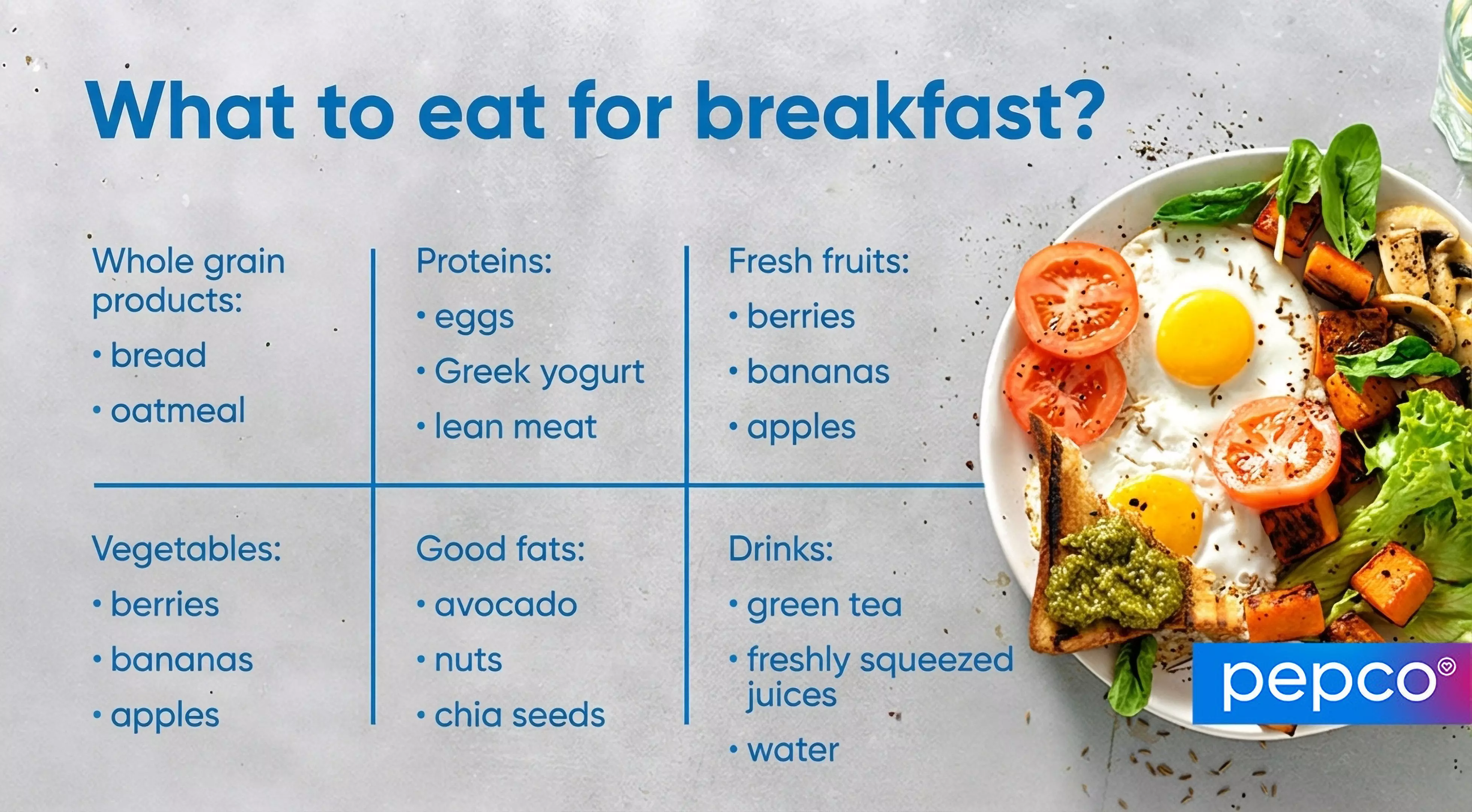
  • Proteins are essential for tissue building and regeneration and for the immune system's function. Good sources of protein for breakfast include eggs, natural yogurt, cottage cheese, lean cheese, and plant-based alternatives such as tofu or plant-based yogurts.

  • Carbohydrates provide the energy needed for the body to function. Healthy sources of carbohydrates are primarily whole-grain products, such as oatmeal, whole-grain bread, or groats. They also provide fiber, which supports digestion and gives a feeling of fullness.

  • Fats, especially unsaturated ones, are important for the proper functioning of the brain and heart. Good choices for breakfast include avocado, nuts, seeds, as well as olive oil or flaxseed oil as an addition to salads or sandwiches.

  • Fiber plays a key role in healthy digestion and helps maintain stable blood sugar levels. We can find it in fruits, vegetables, whole-grain cereal products, and seeds, such as flaxseed or chia seeds.

  • Vitamins are essential for overall health and well-being. A vitamin-rich breakfast can be achieved by including fresh fruits and vegetables in your diet, such as blueberries, strawberries, oranges, or spinach.

A properly balanced breakfast, containing all these components, will provide energy for the entire morning, support concentration, and help maintain a healthy body weight.

The amount of individual macronutrients in the morning meal depends primarily on each person's caloric needs. The most commonly used percentage breakdown is: 30% protein, 50% carbohydrates, and 20% fats, meaning that the daily caloric requirement is met by 30% from protein, 50% from carbohydrates, and 20% from fats.

Note! The proportions may vary for different individuals, e.g., those on reduction diets, elimination diets, or pursuing specific training goals!

Ideas for a healthy breakfast at home

Preparing a healthy and tasty breakfast doesn't have to be time-consuming! Discover a few recipes for breakfasts that will satisfy different dietary needs.

Protein-rich breakfast:

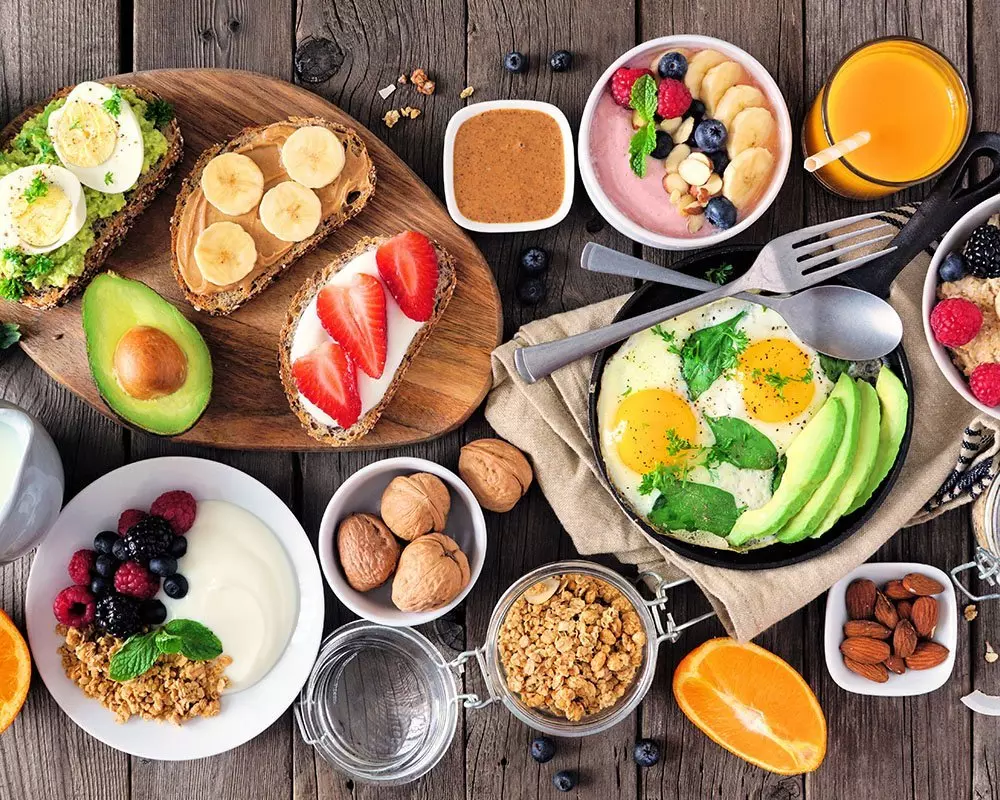
  1. Scrambled eggs with vegetables: whisk 2-3 eggs, add salt, pepper, and then mix with your favorite vegetables, such as spinach, tomatoes, or mushrooms. Fry in a pan with a little olive oil until the desired consistency is achieved.
  2. Protein smoothie: blend a scoop of plant-based or whey protein, a banana, a handful of spinach, a tablespoon of peanut butter, and a glass of plant-based or cow's milk in a blender.

Carbohydrate-rich breakfast:

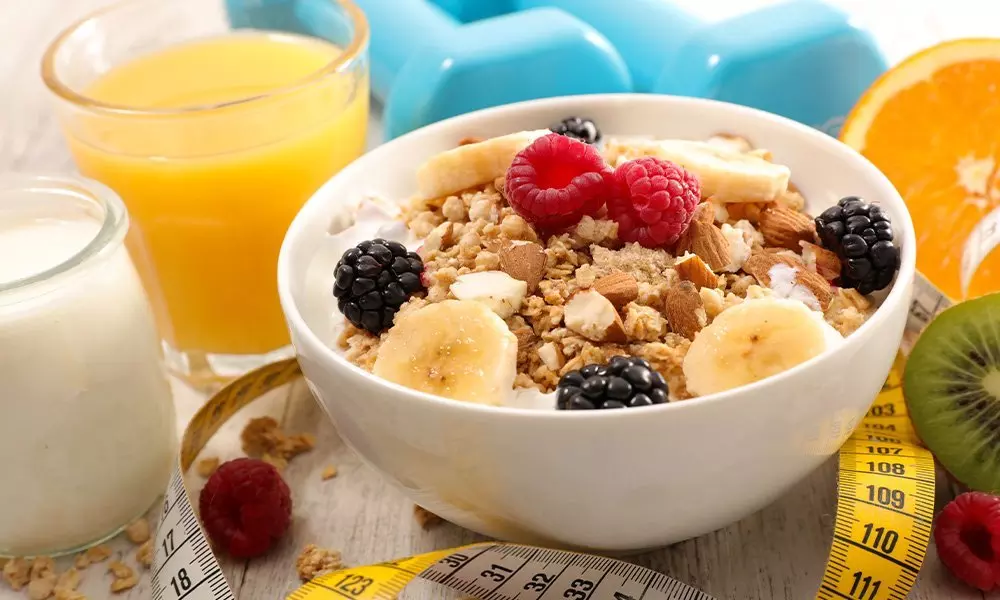
  1. Oatmeal: cook oatmeal in milk or water, adding a pinch of cinnamon. After cooking, add fresh fruits (e.g., blueberries or bananas) and a tablespoon of honey or maple syrup to enhance the sweet taste of the meal.
  2. Whole-grain toast with avocado: spread whole-grain bread toast with mashed avocado, add salt, pepper, and top with tomato slices or a hard-boiled egg.

Perfectly balanced breakfast:

  1. Yogurt with fruits and nuts: add chopped fruits, e.g., apple or pear, to a bowl of natural yogurt. Sprinkle the yogurt with fruits with a handful of nut mix.
  2. Whole-grain bread sandwiches with hummus and vegetables: spread slices of whole-grain bread with hummus, then add cucumber slices, tomato, and a few lettuce leaves.

Remember that the way our meals are served also contributes to their tastiness! Check out the elegant plates and bowls at Pepco, which will be perfect for serving breakfasts.

Tasty and nutritious breakfast on the go

The fast pace of modern life and mornings filled with obligations do not have to mean giving up healthy breakfasts. All you need is to stock up on sturdy food containers and prepare your meal the day before.

Excellent options for a healthy breakfast on the go include: wraps with fresh vegetables and hummus, homemade yogurt with muesli and fruits, whole-grain bread sandwiches with lean meat, and homemade energy bars made from oatmeal and fruits. Each of these options is not only healthy but also practical, as it allows you to take your breakfast with you and eat it anywhere. Thanks to these ideas for breakfast on the go, even the busiest people can enjoy a healthy and tasty start to the day.