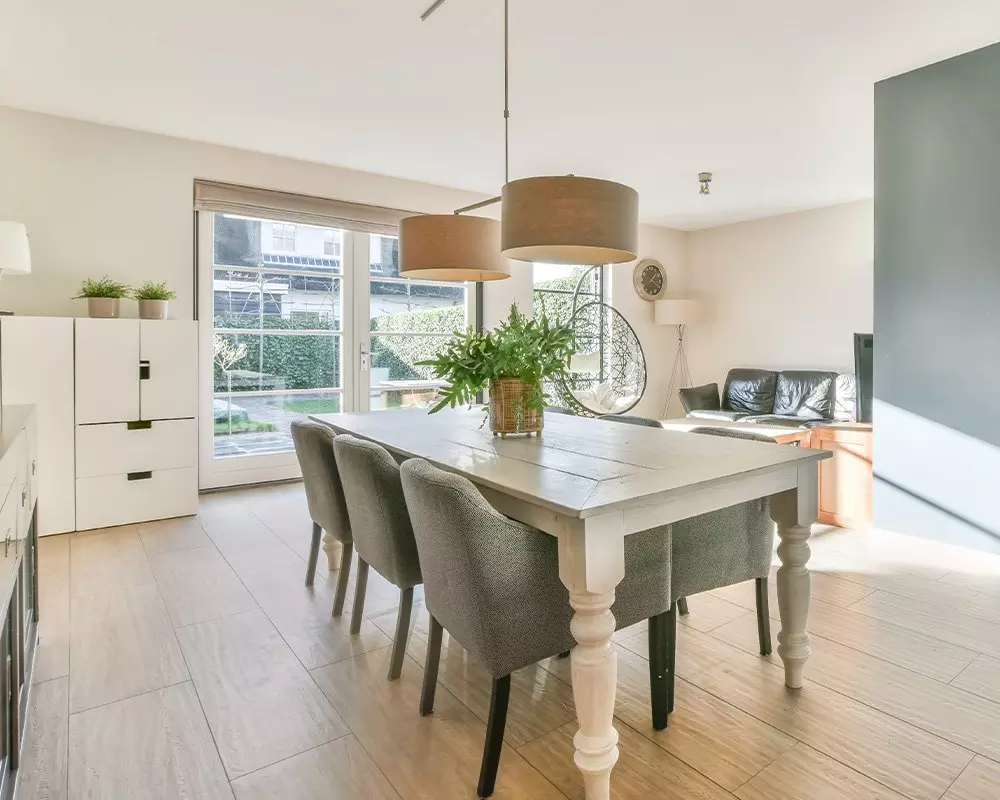
Dining room idea. How to arrange and equip it?
7 mins read czytania
5 February 2024

Arranging a dining room requires consideration of many aspects, from choosing the right furniture, through lighting, to decorations and accessories. Proper planning of this space allows you to create a place that will be not only maximally functional but also cozy and inspiring. Check out our dining room ideas and create your own place for family feasting.

Plan your dining room from scratch

Planning the dining space is a key step in creating a functional and pleasant place for shared meals. How to assess the available space and adapt the equipment to it?

  1. Measure the area designated for the dining room precisely. Take into account not only the floor area but also the ceiling height, the placement of doors and windows, and any other fixed elements such as fireplaces or niches.
  2. Consider how many people you want to regularly host at the table. Will the dining room be used mainly for family meals or for larger celebrations?
  3. Plan the optimal furniture arrangement. Make sure there is enough space around the table for chairs – there should be at least 90 cm of space between the edge of the table and the wall (to allow for easy getting up and sitting down), and the distance between chairs should be at least 60 cm (measured from the center of the chairs).
  4. If you plan to place additional furniture in the dining room, e.g., a display cabinet with tableware or a sideboard, remember to leave enough space in front of them – doors and drawers should open freely.

Remember that the use of mirrors, appropriate lighting, and light colors can optically enlarge the space, making the dining room appear larger and more open.

Decorations, accessories, and tableware for the dining room

To start, choose curtains and rugs that match the color scheme and style of the dining room. Decorations that will add character to the interior include candle holders and candles, as well as green plants.

On dining tables, you can use tablecloths, runners, and placemats:

  • Tablecloths – ideal for creating an elegant table setting for special occasions. Choose easy-to-clean materials that match the dining room style.
  • Runners and placemats – are a great solution for everyday use, adding color to the dining room and protecting the tabletop.

Tableware is a key element of any dining room. Complete your set of cups and mugs, plates, and cutlery that will fit well with the interior style and suit the individual preferences of household members. It is also worth having practical serving accessories on hand, such as cheese boards, pitchers, and bowls.

Remember that decorations and accessories should complement, not dominate, the dining room space. When choosing them, follow the principle of moderation and harmony to create a cohesive and visually pleasing interior.

Dining room color and style - inspirations

Choosing the right style and color scheme is an inseparable element of arranging a dining room, which significantly impacts the atmosphere and character of this room.

The most popular styles are: modern, Scandinavian, and rustic. A modern-style dining room is characterized by clean lines, minimalism, and most often a neutral color palette. Scandinavian style perfectly combines functionality with natural beauty. It is dominated by light, pastel colors, natural wood, and simple but elegant forms. Rustic style is ideal for lovers of warm and traditional interior looks. This style is dominated by natural materials such as wood, rattan, wicker, and stone, as well as warm, earthy colors with colorful accents.

Colors in interiors are responsible for creating atmosphere. Light, warm colors can make the dining room cozy, while cool shades and grays will introduce a modern, elegant mood. It is worth experimenting with color contrast and balance. For example, dark furniture can look striking against light walls, and colorful accessories can liven up a neutral space. Remember that the dining room's color scheme should harmonize with the rest of the house, creating a cohesive whole and a harmonious flow between rooms.
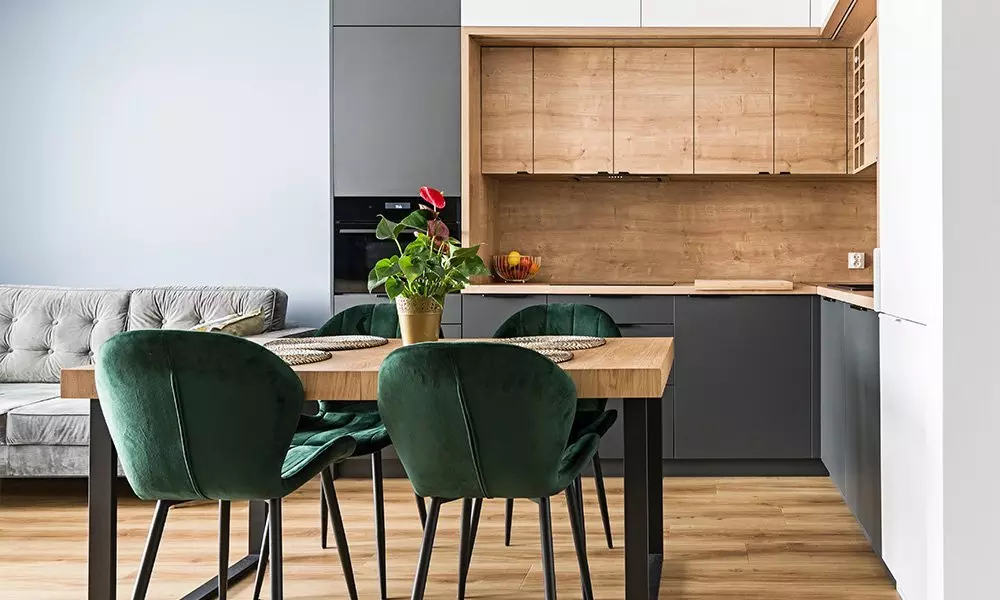
Table and chairs – the heart of every dining room

The key to a comfortable and practically arranged dining room is, of course, appropriately chosen table and chairs.

How to choose a dining table?

Choose a table size that fits the dining room size and the number of people you usually host at home. Remember to leave enough space around the table – the ability to move chairs freely and maintain the possibility of moving around the table is very important!

The shape of the table should match the shape of the dining room. Round tables are ideal for smaller spaces and encourage conversation, while rectangular tables work better in larger rooms. The choice of material depends on the interior style and the atmosphere you want to create. Wooden tables bring warmth and naturalness, glass tables bring lightness and modernity, and metal tables give the arrangement an industrial character.

How to choose dining chairs?

Opt for comfortable chairs with ergonomic seats and backrests. The chairs should harmonize with the style of the table and the entire dining room – you can choose to match materials and colors or create an interesting contrast. Make sure the chairs are the right height – ideally, there should be about 30-40 cm of free space between the tabletop and the chair seat. Also, pay attention to their quality and finish, which will translate into ease of keeping the chairs clean.

Dining room lighting – ensure functionality and a good atmosphere

In a small dining room, main lighting is sufficient, in the form of a pendant lamp (preferably about 75-90 cm above the tabletop) or a chandelier. This type of lighting provides strong but diffused light that effectively illuminates the entire space. In larger interiors, it is a good idea to invest in several light sources that will provide the dining room with the desired functionality and atmosphere. In addition to main lighting, accent lighting (e.g., table lamps, LED strips, candle holders) and functional lighting (e.g., table lamps on a sideboard, or spot lighting in the form of wall sconces) can also appear in the interiors.

Remember that lighting should be arranged to evenly illuminate the entire space, avoiding shadows and glare.

Finally, remember that your dining room should reflect your personal style and needs. Regardless of whether you prefer a minimalist approach or opulent decorations, it is important to create a space that encourages shared meals and conversations. Perfectly chosen furniture, lighting, and decorations can transform the dining room into the heart of the home, where family and friends can gather and enjoy time spent together.