Montessori Method
5 mins read czytania
5 June 2024

Raising children according to Montessori ideas is met with great interest. In many cities, there are kindergartens and schools whose programs are based on this method. What exactly is the Montessori method and how can its elements be implemented in your own home?

What is the Montessori method and what is its origin?

Behind the educational and upbringing method that is the Montessori method, which is still popular today, stands the Italian doctor and educator – Maria Montessori. She was not a supporter of traditional upbringing and educational methods, which emphasized discipline and absolute obedience of children. Maria Montessori was of the opinion that such an approach discourages children from learning and blocks their natural potential, which is why she developed her own upbringing and educational methods, which she then implemented in the school she ran.

Basic assumptions of the Montessori method:

  • Individual approach – every child is different, develops at their own pace, has their own interests and needs.
  • No system of rewards and punishments – children should be stimulated to have an internal need to explore the world, learn, and self-control.
  • Treating the child as a subject, not an object – the child should be given the opportunity to make independent decisions about themselves, which promotes the development of their autonomy. A great example of such an approach is allowing the child to decide for themselves what clothes they want to wear, and even what children's clothing to buy.
  • Allowing to explore the world with all senses and to learn through play – these are very important aspects of the Montessori method. Education for younger children should focus on practical activities.

It is not without reason that in Montessori kindergartens and schools, there are children of different ages in individual groups. It is not the date of birth that determines what interests a child will show and how quickly they will need additional information on a chosen topic.

Montessori method at home

Implementing principles of upbringing and education in accordance with the Montessori method does not require great effort or huge financial outlays. The key is the approach to the child and treating them as a being possessing inner wisdom, a need for individual development, and learning through play.

In the Montessori method, following the child's natural instincts – their curiosity about the world and the need to experience it – is of great importance. It is also crucial to understand that learning about the world can be gained from practical activities and play – especially outdoors. For this reason, it is worth spending time with your child in the garden, park, and forest, and reaching for outdoor toys that will allow them to develop creativity and their natural need for exploration.

The Montessori method also places great emphasis on children's independence, which can be supported by allowing children to make their own decisions, but also by obliging them to perform certain household chores. These activities should be adapted to the child's abilities – the easiest way to start is by teaching the toddler that all toys should have their permanent place and should be tidied up after playing.

Things that may be useful in a home where children are raised according to Montessori methods:

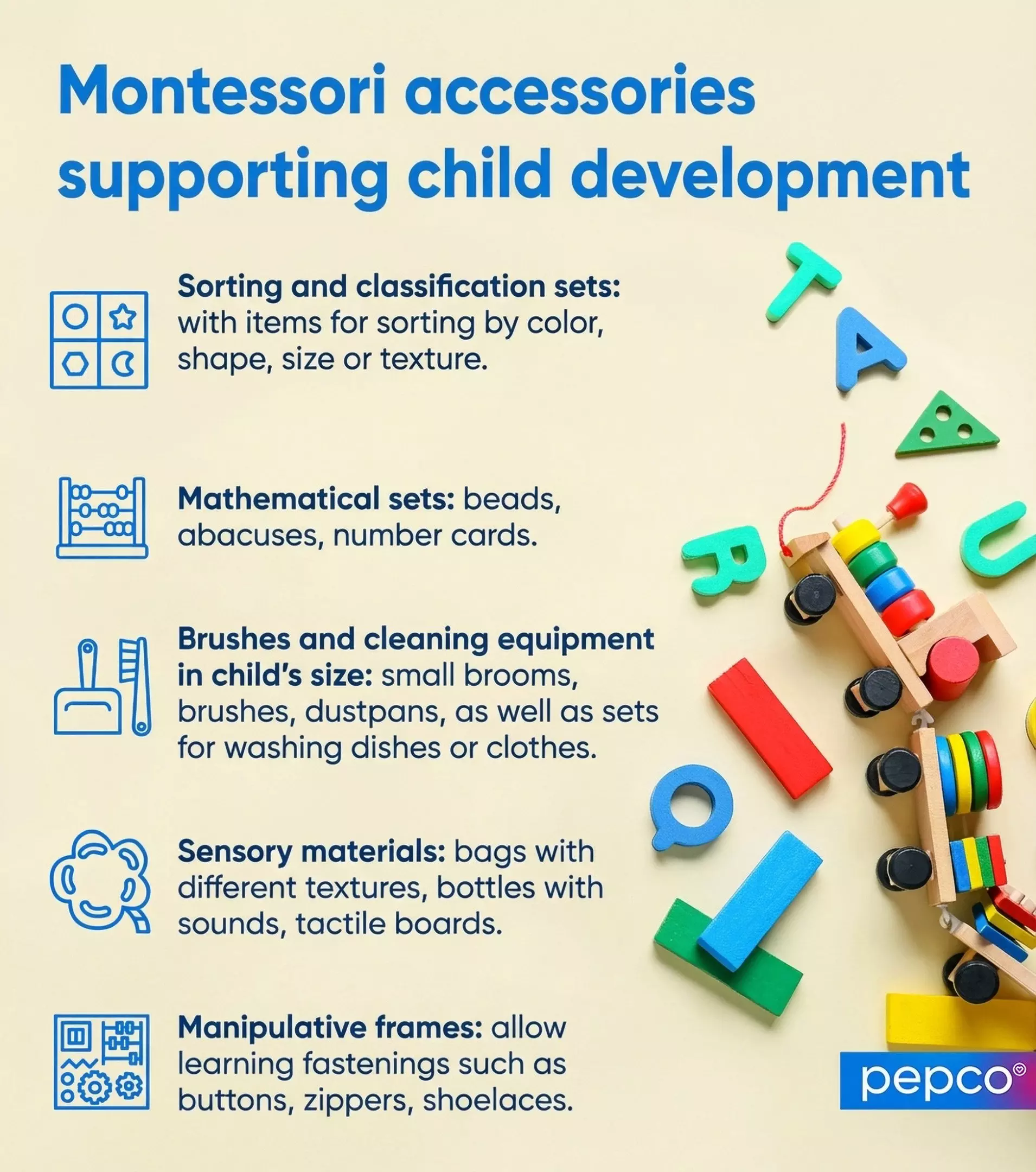
  • Art supplies – the Montessori method focuses on stimulating children's creativity, which is often expressed in artistic activities. It is worth having modeling clay, paints, a chalk board, and other types of art supplies on hand to help the child develop their artistic passions. Importantly, you will find these items in Pepco's offer at good prices.
  • Materials for creative activities – for example, a jewelry-making kit with beads or construction blocks. Playing with them can be very creative.
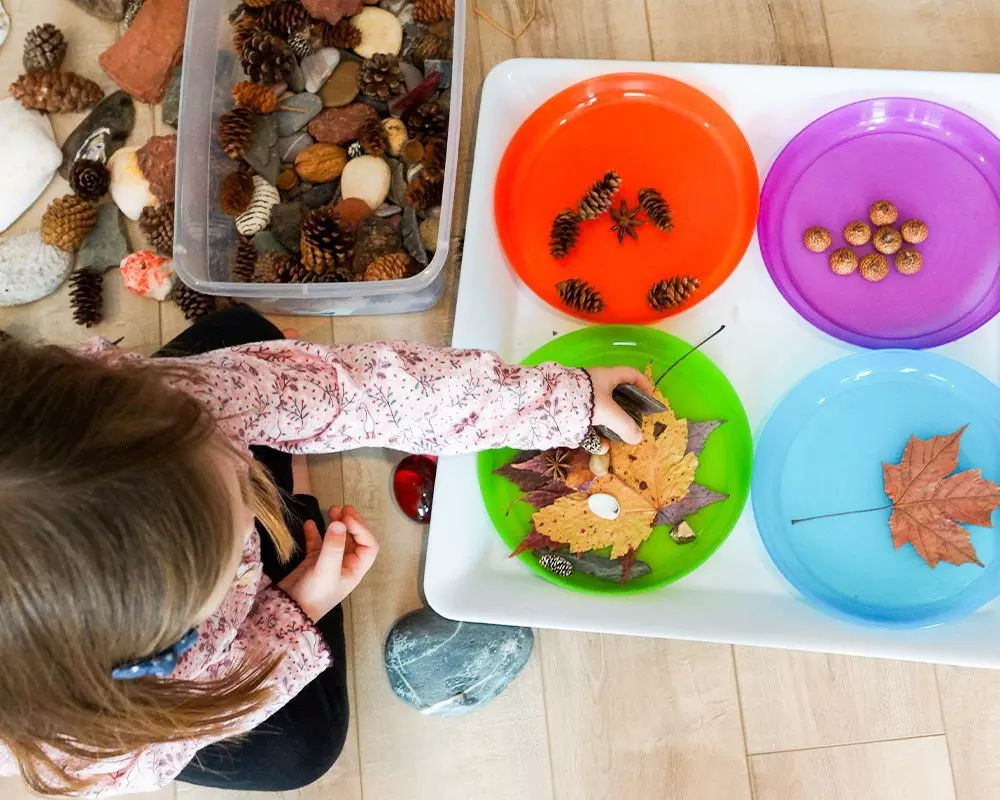
In fact, the Montessori method often emphasizes the independent creation of toys for children. A bottle filled with beads can be a great rattle, and learning to distinguish colors and shapes is supported by both a special sorter and colorful pasta of various shapes, which can be mixed and then sorted.

You will also find materials needed for independently preparing toys for children in Pepco's offer – importantly, these will be inexpensive, yet solid and practical items. According to the Montessori idea, playing is not only about assembling puzzles or dressing dolls, but also about jumping through puddles in the forest or drawing in the sand on the beach with a stick. A smaller number of typical toys at home does not mean that the child will not have anything to do, but on the contrary – it can stimulate their creativity in a completely new direction. It's not about not buying dolls and stuffed animals for a toddler, but about giving the child more choice, variety, and the opportunity to decide for themselves what they want to play with and with what.