Safe holidays with a child by the water? These rules you must know!
5 mins read czytania
18 July 2025

Holidays by the water are a universal way to have a great vacation. Children can have fun in the water, adults can stretch their legs on the beach, and there are countless ways to spend this time attractively. However, if you are planning holidays with a child by the sea, lake or river, be sure to take a moment to prepare, which will help you avoid unpleasant surprises. What should you have with you, what rules should you know, and what should you teach your child before taking them to the beach? We answer!

How to prepare for holidays with a child by the water?

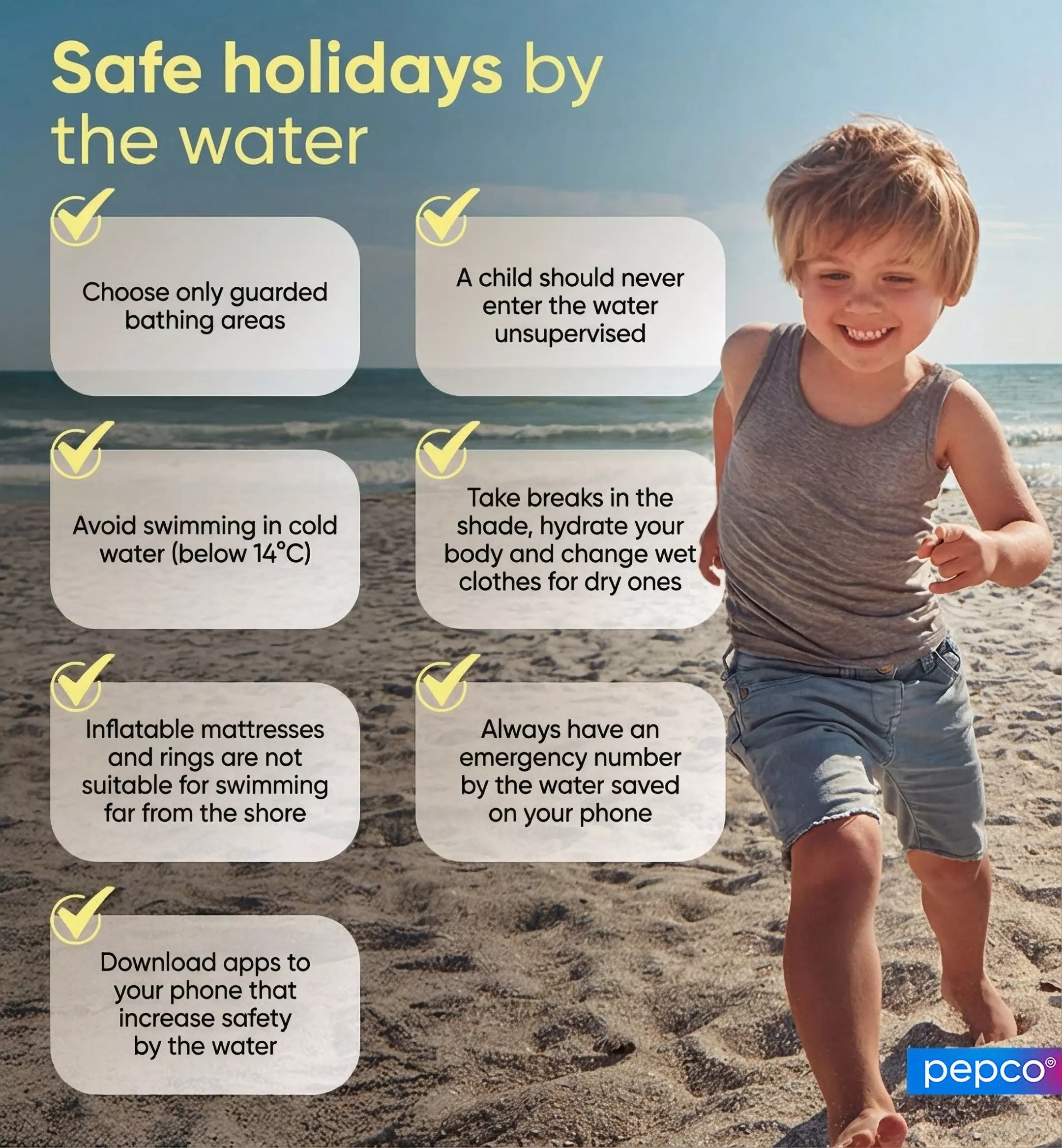
One of the most important decisions is choosing a location.Children by the sea or lake will be much safer if you choose a guarded bathing area with a gentle slope into the water. The presence of lifeguards and appropriate infrastructure (e.g. toilets) are elements that increase safety and comfort.

When packing toys and accessories for holidays with a child, it is also worth thinking about things that may prove essential by the water. If you plan to rent a kayak or a pedal boat, a life jacket or a life vest is essential. They must be adapted to the child's weight and height and always properly fastened. If the toddler will only splash by the shore, a swim ring or armbands will suffice (but even with them, the child must be under constant supervision of a guardian).

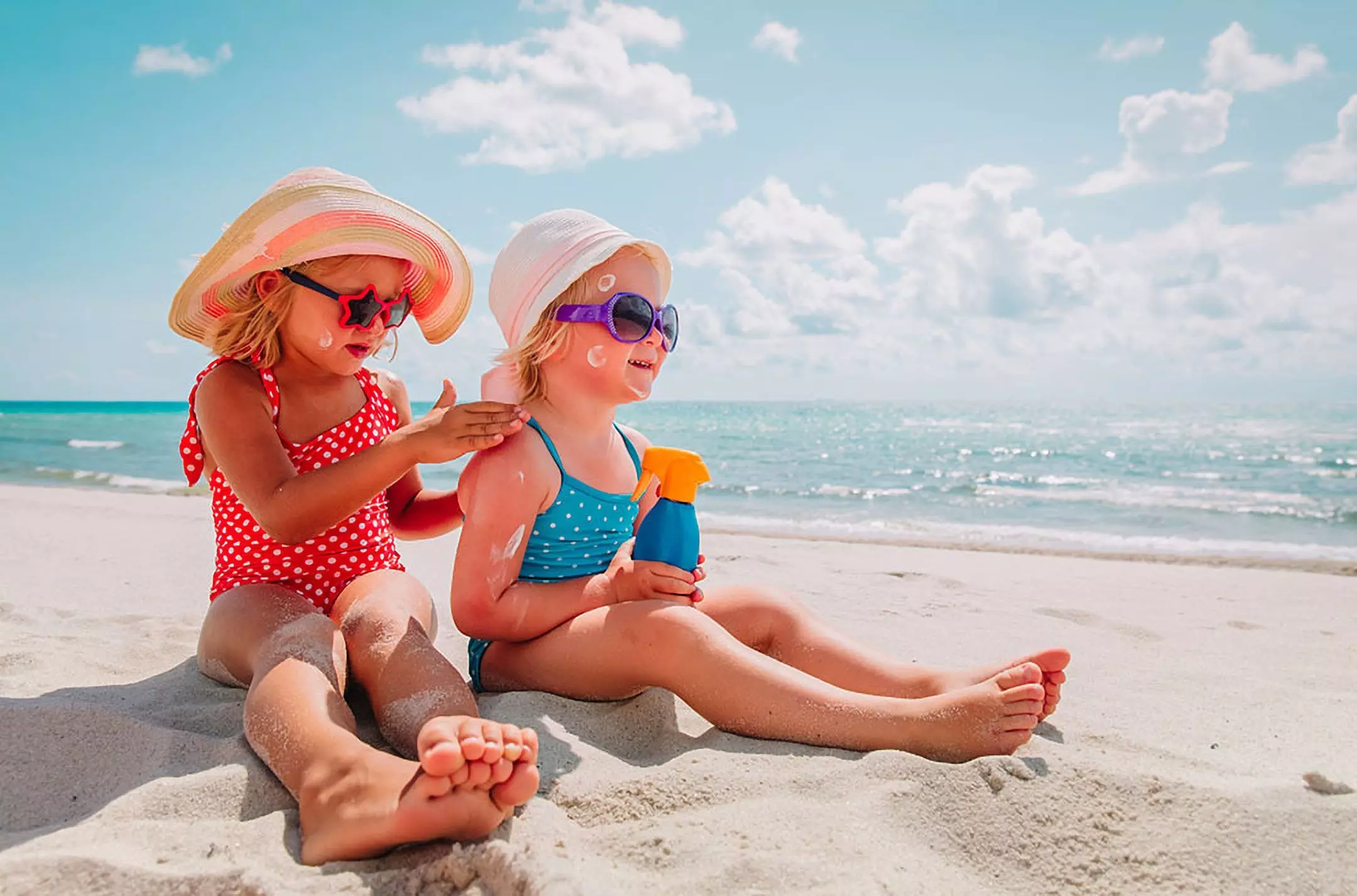
Don't forget about sunscreen with a high UV filter (50+), which must be applied several times a day, and about headwear. In addition, it is worth equipping your toddler with breathable clothes and accessories: girls', e.g. swimsuits and beach cover-ups, or boys' clothes– e.g. swim trunks and light cotton t-shirts and shorts.

Sun protection is not only for the child, but also for you – UVA radiation causes faster skin aging and increases the risk of cancer. So, apply sunscreen to your whole family and protect your heads and eyes from the sun.

Also, throw a first-aid kit with basic supplies into your beach bag, e.g. plasters, disinfectants for minor cuts and burns, or a soothing spray. Thanks to this, even in case of minor difficulties, you will have everything under control.

Water safety rules – what should a child know?

It is worth explaining water safety rules even to the youngest children, but it must be done in a way adapted to their age.The most important rule? A child never enters the water without a parent or guardian, regardless of whether they know the body of water well or can swim. They should know what the flags at the bathing area mean. It is also worth explaining why you should avoid running on a wet pier and why you should not dive headfirst into unknown water, even if others do.

One of the most difficult, but extremely important rules is: "do not rescue anyone on your own." If a child notices that someone is drowning, they should call for help as quickly as possible by shouting loudly. It is worth practicing such scenarios with a child, e.g. during play. This rule also applies to you –if you don't feel up to it, don't jump into the water to save a drowning person. It is better to call a lifeguard and/or call the emergency number (check which one is valid in your country).

Safe and peaceful holidays by the sea for parents

Holidays with a child by the sea do not have to mean being constantly vigilant. It is worth sharing the care of children with another adult. When one person watches the child, the other can go for a swim or relax on the sand, and then switch.

Equally important is the balance between time in the water and rest in the shade. After 15-20 minutes of playing by the sea in the sun, it is worth taking a break in the shade and having a drink. This reduces the risk of overheating. During such a break, quiet games on the sand, such as building castles, looking for shells, or drawing with a stick, will be suitable. A child should not swim in the water on an empty stomach or immediately after eating.

What else?

  • Do not swim in unmarked, unguarded areas or where swimming is prohibited.
  • Avoid gravel pits, clay pits or wild ponds, as they may be overgrown and dangerous, and in case of danger, no one will hear a call for help.
  • Use only tested equipment and do not go out on inflatable mattresses into deep water.

And remember that parents are bound by the same rules as children!

Approach holidays by the water with calm and reason, and you will find that it will be your dream family vacation.